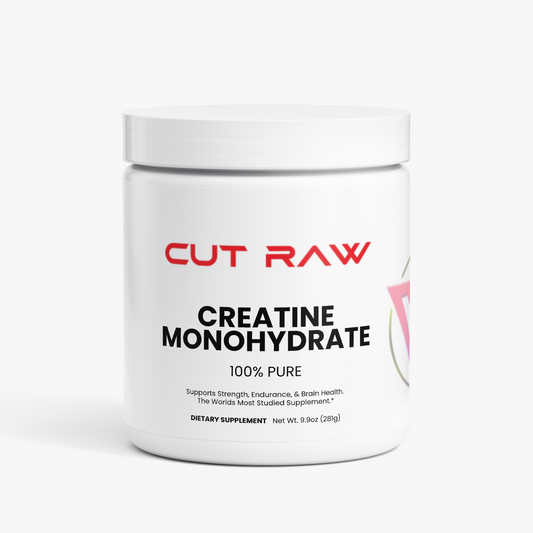


Creatine is one of the most researched and effective supplements in the world. Despite decades of use, it’s still often misunderstood. Many people think creatine is only for bodybuilders or that it’s unsafe — neither is true.
In reality, creatine is a naturally occurring compound found in your body and in foods like red meat and fish. It plays a key role in how your body produces energy, especially during high-intensity activity — both physical and mental.
What Does Creatine Do in the Body?
Creatine’s main job is to help produce ATP (adenosine triphosphate), which is your body’s primary energy currency.
When you lift weights, sprint, jump, or perform any explosive movement, ATP is rapidly depleted. Creatine helps regenerate ATP faster, allowing you to:
- Produce more force
- Train harder
- Recover quicker between efforts
This is why creatine is so effective for strength training, sports, and high-intensity workouts.
How Creatine Helps Build Muscle
Creatine supports muscle growth in several ways:
1. Increased Strength & Power
By improving ATP availability, creatine allows you to lift heavier weights or get more reps. Over time, this leads to greater muscle growth.
2. Improved Training Volume
More energy = better workouts. Better workouts = better results.
3. Cell Hydration
Creatine pulls water into muscle cells, creating a more anabolic (muscle-building) environment.
4. Enhanced Recovery
Creatine may reduce muscle damage and inflammation, helping you recover faster between sessions.
This combination is why creatine consistently shows improvements in lean muscle mass across beginners, advanced lifters, and athletes.
Creatine Isn’t Just for Muscles — It Helps the Brain Too
Your brain uses a massive amount of energy, and just like your muscles, it relies on ATP.
Research shows creatine may support:
- Cognitive performance
- Mental clarity
- Memory
- Resistance to mental fatigue
This is especially relevant for:
- Athletes
- Students
- People under high stress
- Those who don’t eat much red meat
- Individuals experiencing sleep deprivation
Some studies also suggest potential benefits for mood, neurological health, and protection against age-related cognitive decline.
Why Should You Take Creatine?
Creatine is:
- One of the most studied supplements ever
- Proven safe for long-term use in healthy individuals
- Effective for strength, muscle, and performance
- Potentially beneficial for brain and cognitive health
If you train, think, work hard, or want to improve physical or mental performance — creatine makes sense.
How Much Creatine Should You Take Per Day?
Traditional Recommendation
-
3–5 grams per day
This is enough to fully saturate muscle creatine stores for most people.
Newer Research & Higher Doses
More recent research suggests that higher intakes (around 8–10 grams per day) may offer additional benefits, particularly for:
- Larger individuals
- High-volume or high-intensity athletes
- Cognitive and brain-related benefits
- Recovery and injury prevention
Some studies even explore doses up to 10–20 grams per day, typically split into multiple servings, especially in clinical or therapeutic contexts.
Practical Takeaway
- 5g/day → Solid baseline for most people
- 8–10g/day → Potential added benefits for athletes, hard trainers, and brain health
- Split higher doses into 2 servings to reduce stomach discomfort
No loading phase is required — daily consistency matters more.